
A
Anonymous User
Meta, Google
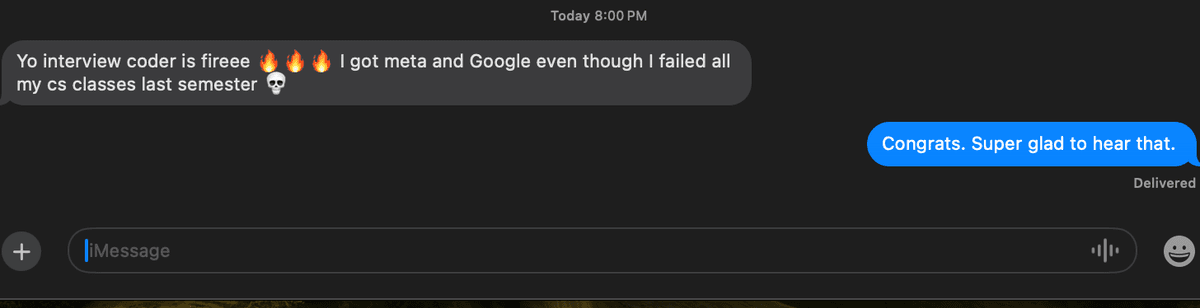
Got Meta and Google offers even though I failed all my CS classes!
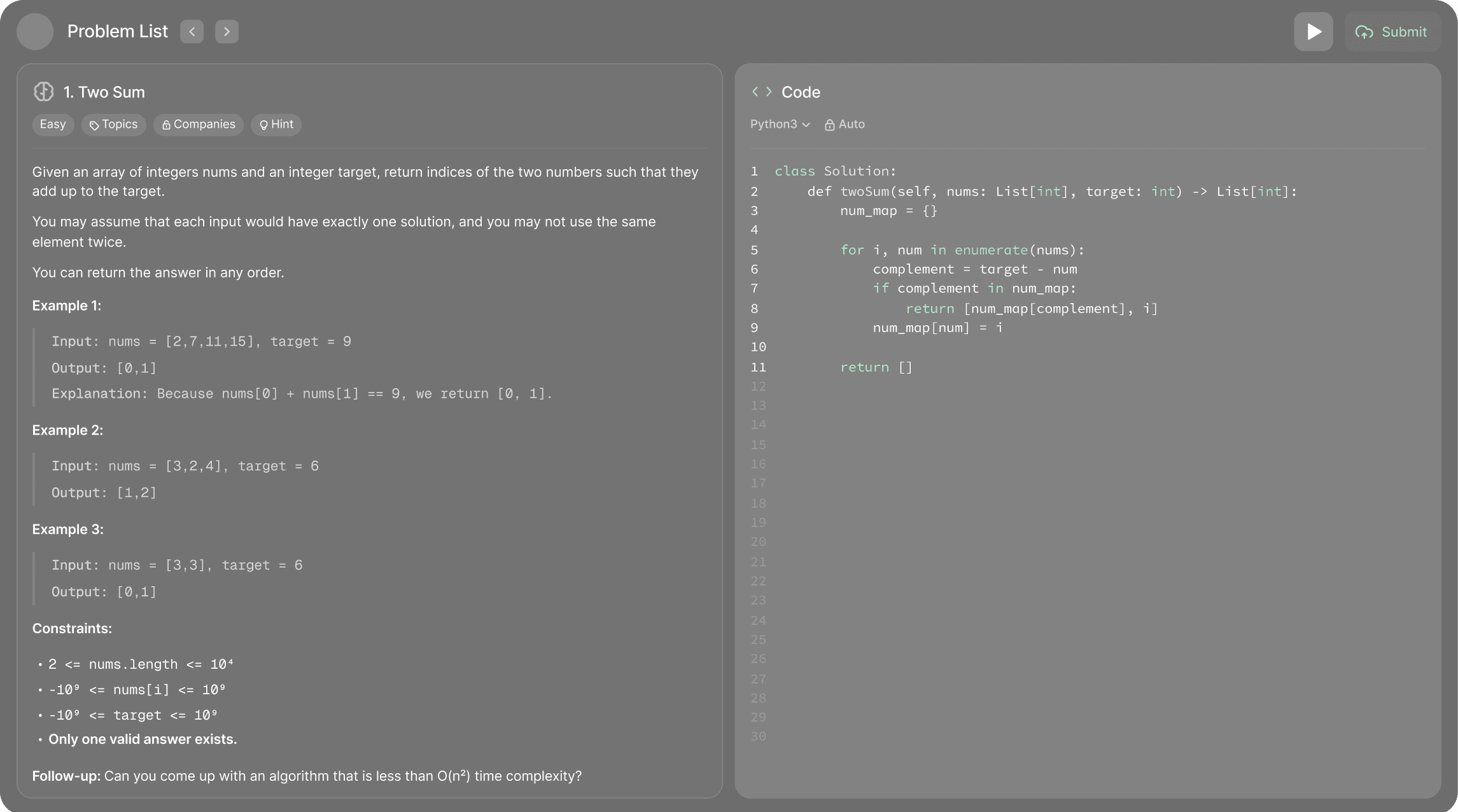
Architecture, Scalability, and Trade-Off Analysis On Demand
System design interviews test breadth across distributed systems, databases, caching, and load balancing — all in 45 minutes. Interview Coder listens to the prompt, suggests a high-level architecture, and provides component recommendations with specific trade-off analysis for each decision.

Architect with confidence
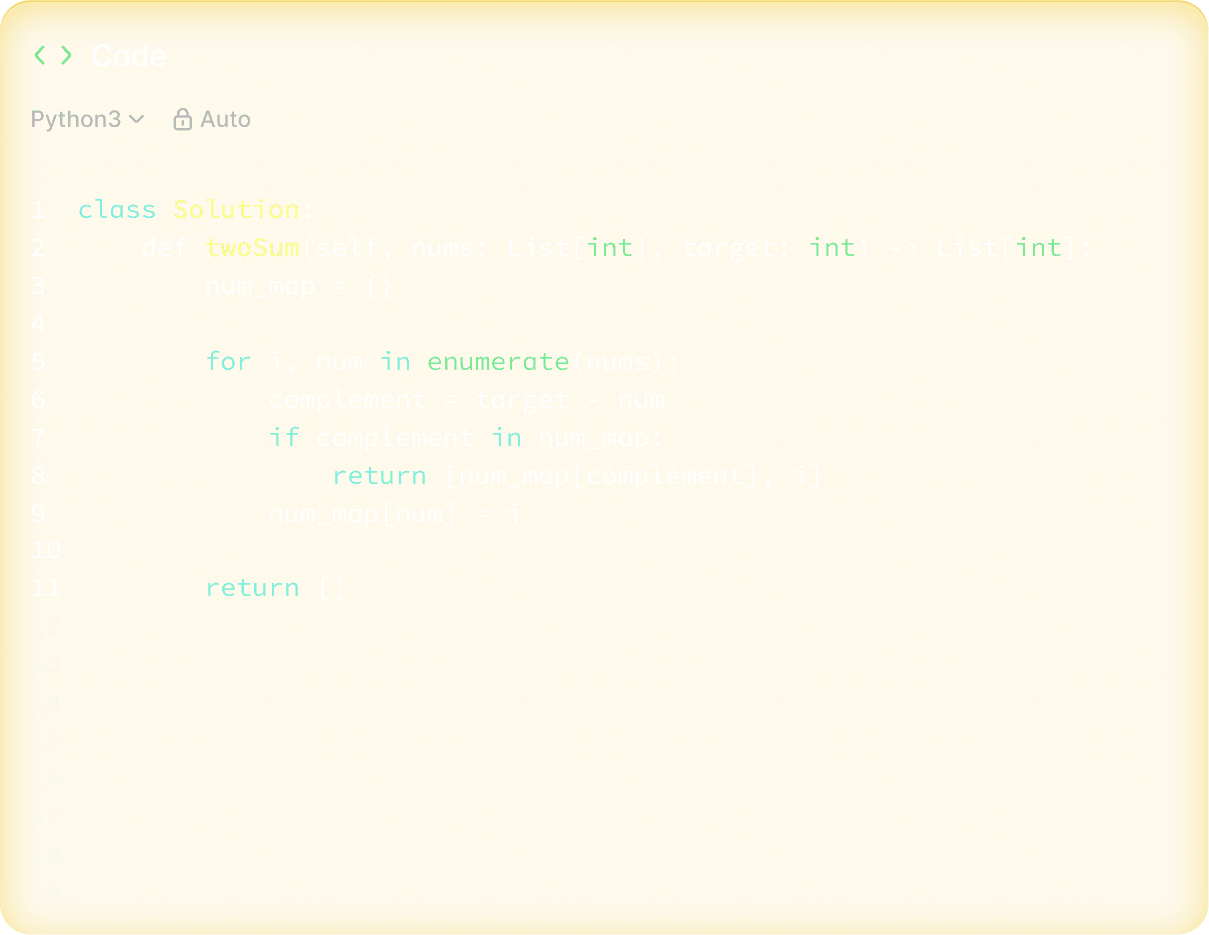
Transcribes the design prompt from your interviewer's voice and suggests a high-level architecture with the right components — load balancers, caches, message queues, databases.
Recommends specific technology choices — SQL vs NoSQL, Redis vs Memcached, Kafka vs SQS — with trade-off explanations tailored to the design constraints.
Generates QPS estimates, storage calculations, bandwidth requirements, and server count projections based on the scale requirements mentioned by your interviewer.
Structures trade-off discussions for every decision point: 'We could use eventual consistency here for higher availability, but strong consistency would simplify the client logic.'
Expert advice
Spend the first 5 minutes gathering functional and non-functional requirements. How many users? Read-heavy or write-heavy? Latency requirements? Consistency vs availability preference? This scoping is what separates senior from junior candidates.
Calculate QPS, storage, and bandwidth before drawing a single box. '100M DAU × 10 requests/day = ~12K QPS, with 3x peak = 36K QPS' shows quantitative thinking that interviewers love.
Sketch the full flow from client to database before deep-diving. A complete but shallow design is better than a deep dive into one component with missing pieces.
Pro tip: Interview Coder provides full architecture suggestions with all components so you can iterate on the complete picture.
For every choice — SQL vs NoSQL, cache vs no cache, sync vs async — explicitly state the trade-off. 'I'm choosing Cassandra over PostgreSQL because the write throughput requirement of 50K writes/sec favors an LSM-tree storage engine.'
System design interviews reward structured thinking and trade-off awareness. Interview Coder provides the technical depth so you can focus on communication.
Works seamlessly in real interviews across engineering, product, data, and more.


From landing internships to staff roles at FAANG, Big Tech, Quant firms, and beyond.
Download for free
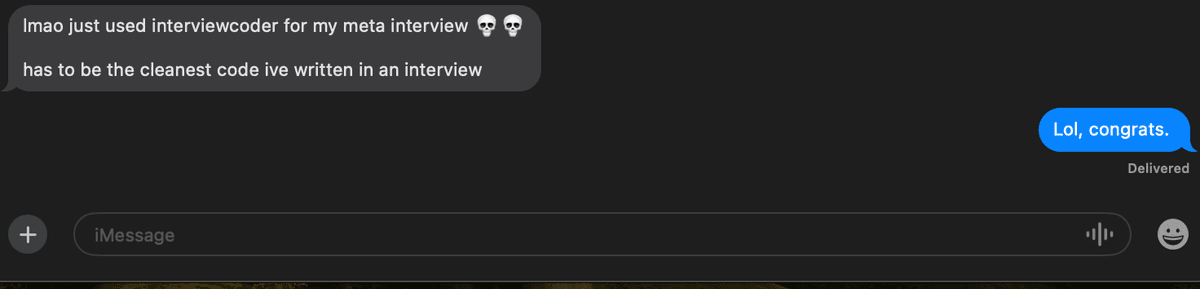
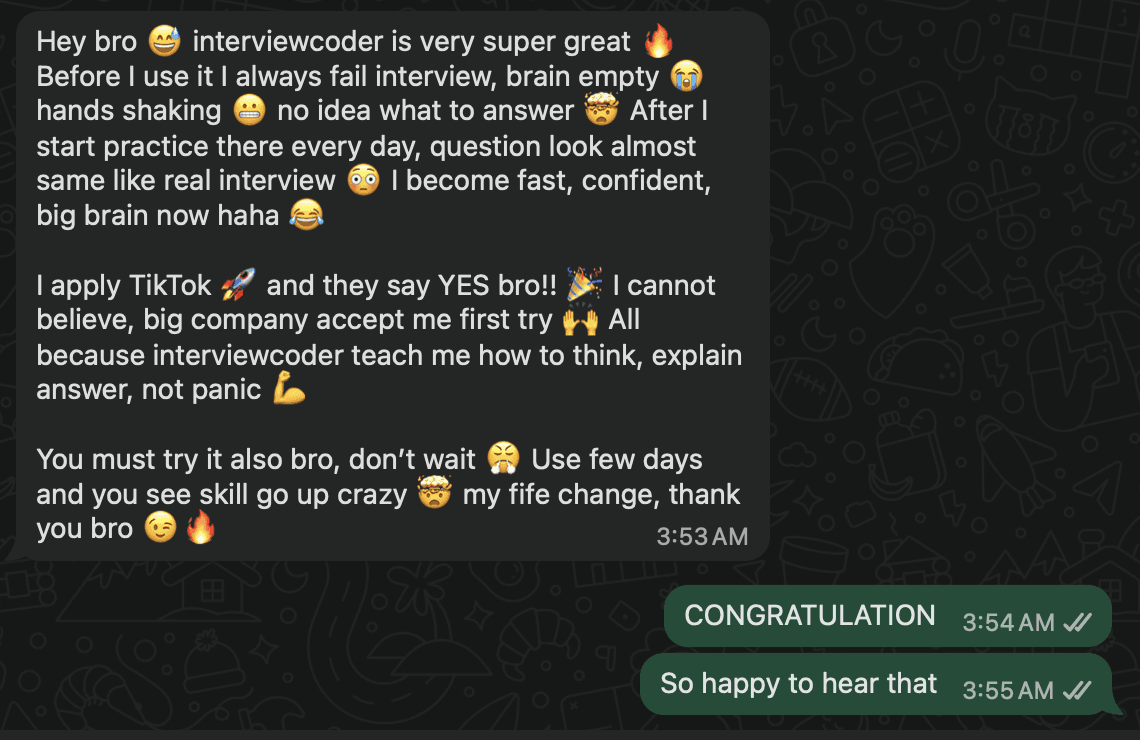

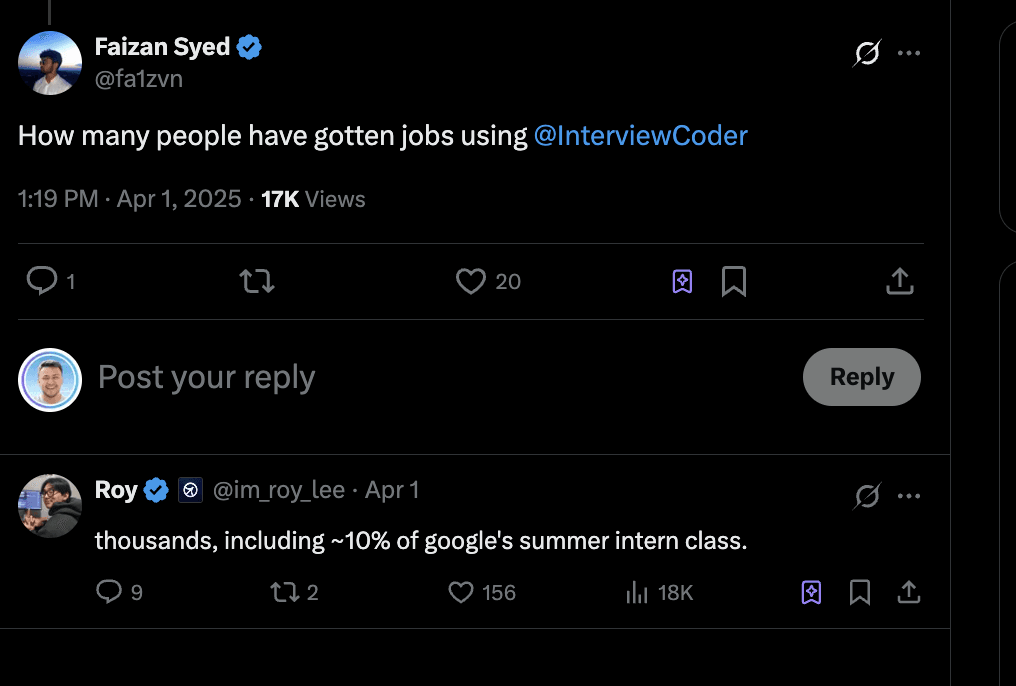






 and more...
Cracked $174k/yr job at Adobe with help of interview coder

Cracked $182k/yr job at amazon with help of interview coder

Cracked $95k/yr job at Capgemini with help of interview coder

Cracked $205k/yr job at Cloudflare with help of interview coder
Cracked $174k/yr job at Adobe with help of interview coder
Cracked $182k/yr job at amazon with help of interview coder
Cracked $95k/yr job at Capgemini with help of interview coder
Cracked $205k/yr job at Cloudflare with help of interview coder

Cracked $234k/yr job at Apple with help of interview coder

Cracked $85k/yr job at Flipkart with help of interview coder

Cracked $175k/yr job at IBM with help of interview coder

Cracked $185k/yr job at Microsoft with help of interview coder

Cracked $196k/yr job at NVIDIA with help of interview coder

Cracked $173k/yr job at PayPal with help of interview coder

Cracked $222k/yr job at Roblox with help of interview coder

Cracked $234k/yr job at Snowflake with help of interview coder
System Design Interview FAQ
Common Questions Answered
Interview Coder covers the complete range of system design topics that appear in technical interviews at top companies. This includes load balancing strategies, caching layers (Redis, Memcached, CDN-level), database selection (SQL vs NoSQL, when to use each), message queues (Kafka, SQS, RabbitMQ), microservices architecture, API design patterns, and rate limiting implementations. It also handles advanced distributed systems concepts like consistent hashing, data partitioning and sharding, replication strategies, the CAP theorem and its practical implications, and distributed consensus protocols such as Raft and Paxos. Whether you're designing a URL shortener or a real-time multiplayer game backend, Interview Coder provides architecture guidance grounded in production-proven patterns.
Couldn't find your answer?
Send us an email at abdulla@interviewcoder.com

From requirements gathering to component selection to trade-off discussion — Interview Coder provides real-time architecture guidance that's invisible to your interviewer.